


We often use this word to justify someone’s character due to their behavior. However, the word has such a broad connotation and meaning that to label a person entirely as being selfish would not be justified or even qualified. To live in a society with that personality alone would be near impossible.. we would find ourselves deeply isolated from the real world.
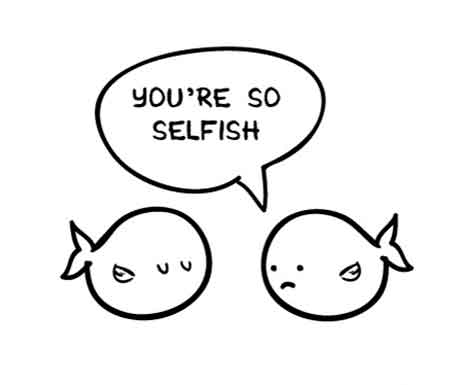
Understanding selfishness with examples
So why do we consider other people are selfish?
Maybe when you have a need and the other person does not fulfill it, you immediately label the person as selfish. It could be that you are selfish to think so and expect the other person to happily go about doing what you ask. The point is, when you label someone ‘selfish’, try to put it into perspective and ask why they are being selfish.
Selfish is sometimes associated with arrogance.
We know that arrogant people (who think highly of themselves) are usually always making references to ‘me’ or ‘I’ and does not really pay attention to other folks. We may find these people selfish since their appearance and behavior is always pointing towards them. There are subtle differences here when we associate arrogance to folks who are very talkative and those who are not. You may make the mistake of a quiet person as less arrogant than the talkative part but this may not be true. The quiet person may be equally arrogant in their nature by not associating with other people or deliberately trying to keep away from interactions with other people. Their world will become topsy turvy if they don’t have control over their domain. As a result they can also appear selfish.
Assertiveness & selfishness.
Sometimes assertiveness is construed as selfish but the difference is that the assertive person is empathetic whereas the selfish person is not. A selfish person will normally never undertake a task that you ask them to do for whatever reasons whereas an assertive person will do the task whenever they can.
An assertive person does not have to forceful as the Oxford Dictionaries describe it, a better description is found in the Merriam-Webster dictionary.
Oxford Dictionaries:
confident and forceful behavior
Merriam-Webster:
confident in behavior or style
Oddly enough the first is from the UK and the second from here in the US. This can explain some of the general stereotypical personality traits between these two nations ie. one taking a negative stance on responses to ‘no’, whereas the other nation encourages this kind of behavior. We have heard the negativity of being two faced, maybe it is a result of how we assert ourselves. Anyways, this is probably another discussion of topic for another time.
One of the biggest things we can learn about ourselves is the ability to take control of how we react to an unpleasant situation from say a selfish person. We may feel hurt but out of that comes resentment and to alleviate our stress we start blaming other people for the way we feel. The best course of action is simply to appreciate that these people exist and they may offend you one way or another but make it a point that they may be having a bad day. Also reflect afterwards if the negative reaction was caused by you.
Tags: arrogance, assertiveness, handle selfishness, selfish nature
We often have different viewpoints when someone suddenly says ‘no’ to us and as a result we might label them as selfish, arrogant or in some cases bold. On the opposite side, some cultures find it hard to say ‘yes’ as this can come across as offensive. For example when you are a guest and they ask you whether you want some ‘tea’ and you reply with a ‘yes’, this may come across as offensive in some cultures believe it or not.

Saying no takes some skill
Depending on what kind of relationships you are in, you may feel perfectly within your rights to ask your spouse to buy a gallon of milk on his way back after work. Receiving a ‘no’ response might elevate your emotions and lead to a fight. Again there are good and bad responses to this and is based on your perception of the event. For example, you might just curse your spouse and shout at him for thinking of giving that kind of response. You may feel ‘that was an odd reply, maybe you suddenly feel empathetic and ask ‘really, any reason’. Equally, the person who says ‘no’ can start off by giving good reasons first on why he should say ‘no’. For example, he could start with ‘I’m afraid I will be working late, you would need to pick it up or one of the kids can pick it up’.
The example above was a simple one but it shows how responses from both parties can be worded to avoid miscommunication or heated arguments. It is one of the reasons and and an often used tactic to test and provocate others by people who are skilled in this. Dare I say, it has been used effectively by the male gender to have more control over the opposite sex. It is always wise to listen and assimilate what is said to you before you respond. However, one is unable to stay in this mode of thinking when both parties known to each other are spontaneously engaged in a conversation. If you do most of the talking, you are most likely to be more vulnerable to criticisms as the person who says less.
There is the question of assertiveness that comes into play when saying no partly because you have been a yes person most of the time. Trying to be ‘nice’ and saying yes as opposed to a ‘no’ all the time labels you in the weak category by other people. In order to please others and forgo self-interest the person ends up agreeing to what others are saying. What has to be understood is that a ‘no’ is just an important part of the conversation and relationship as saying a ‘yes’ and is healthy. However, the way we say those are important.
Is there a singular solution to handling yourself in the best manner possible? Unfortunately, we humans are not alike, with some having much tolerance and becoming labeled as a ‘door mat’ whilst others with no patience are considered brash and selfish. Then it stands to reason that the middle ground is the best place to be.
Our machine algorithms developed by the ThinkTank Labs of Jumpdates has sifted through thousands of messages to find the word ‘no. We have learned some interesting tactics that members use to convey a ‘no’ to the other person. Stay tuned for more information on our findings.
Tags: being assertive, how to say no, saying no, saying yes
There is a lot to be said of determining personality traits by the actions and behavior of people and nothing can be more true by observing the way they drive.
Here are a few (and sometimes amusing) ways to sum up people’s personalities
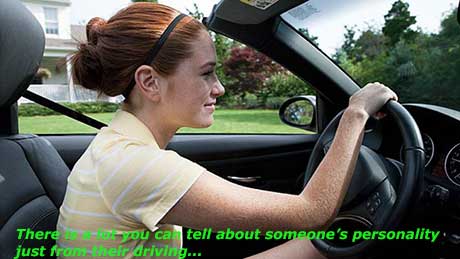
Driving and Personality
1. The impatient and restless driver
Almost all of these drivers can be seen being provocated at the slightest hint of a traffic jam or someone who cut’s in, slow or appears to be causing traffic jams. Unfortunately, these kinds of people always seem to be in a hurry and have no time for others.
2. The over-cautious driver
These people like to stay to themselves and rarely say much during a conversation and their driving is a reflection of that. Since they like solitude, going out to the open road seems a terrifying experience for them since they have no choice but to wrestle with their external surroundings. They take extra precaution to stay zealously close to what is in front of their nose as opposed to the whole environment. Their driving is unappreciated by other passengers.
3. The cool driver
You can imagine what type of personality that this driver possesses. These people are generally young and have little experience on the road. Experienced drivers will know how important it is to drive safely no matter what the personality. They are almost always not the ones that you would go into the car with since you will likely be holding tightly to your seats and giving sighs of relief from hairline misses with other cars. As you can guess, these people are probably the talkative types and loves to impress especially their opposite sex.
4. The analytical driver
These personalities are likely to belong to more mature people and often the one that you find the most comfortable being a passenger. They are not the talk of the town or go out to impress, they are very grounded, maybe boring but always grounded and gives good advice.
In the same way that you can extract personality traits through people’s driving there are other behavior characteristics that you can derive from many other activities. It’s usually a result of the fact that one cannot ‘fake’ their actions or behavior over a particular area of expertise. Take for example the people’s differences when it comes to how they handle their crockware after eating. For example, do they immediately wash up or do they leave it on the side. Do they move the other crockery out of the way without washing to do their own. There is a lot to appreciate in those types of behavior alone.
Next time when you go out on a date, try to observe their behavior in their driving, eating or doing some kind of activity, it can reveal interesting things about the person you are dating.
Tags: behavior from activity, driving and personality, driving personalities, find out person
One can find tons of information related to the subject of finding the ideal partner. In fact, you will find many articles written about this subject on this Jumpdates blog. With the divorce rate on the rise and more people choose not to marry, these are obviously not encouraging news for anyone who want to settle down.

Married couples - east and west
The problem stems from our lack of appreciating the complexities and nuances of personalities that make up an individual. Of course when we go dating with the person, we generally don’t always see the negative side of things as both are trying to impress. This is one of the reasons why the West generally do not understand how the East can marry someone without having met them as the so called ‘arranged marriages’. The Jumpdates ThinkTank Labs have conducted some research on this subject and have come across some insightful trends and patterns that can explain some of these explicable differences.
Although we understand the nature of ‘arranged marriages’ and some may be critical about it’s practice but it is safe to say that the length of marriage would be determining factors for the match.
On the face of things it looks like the East has an upper hand on the longevity of the marriage over their Western counterparts. One should ask why this would be the case.
There are marked differing ideologies related to marriage when we compare the West and the East. Firstly, the communion of marriage between two persons in the East have a wider encompassing reach amongst members of the families. That is to say, the extended families do not move away once the marriage has taken place, in fact, they become an integral part of the future of the coupole. On the opposite side, the Western values are different where a sense of ‘space and independence’ is granted to the couple by families even though they will be still part of their lives. There are advantages and disadvantages to both of these differing family ideals and we will only touch on a few.
When couples of the East generally have trouble adjusting and coping, they can almost always turn to their family members for support. Also, in the Eastern culture, families tend to live together in a bigger household, if not, then not very far from where the couple would live. The advantage of this setup is that couples who are green in the understanding of marriage and cooperation will get a good dose of wisdom, daily checks to make their marriage successful.
The West as we know have a very different viewpoint of how marriages work and the focus is always on the couples to work things out without much outside help. As such the tensions can be high between the couple and without any obvious close support the marriage can deteriorate. Generally marriages in the West happen at later ages unless families have been an integral part of both the couples. It is difficult to say which is better than the other since they both garner human qualities which the other party would not necessarily possess. For example, the couples from the West can be more self-reliant, independent, strong and more driven to pursue their own dreams. Couples from the East may have a cooperative ability to solve problems and can be less self-preserving and look to a wider group for progress.
You the readers can decide what values can be picked from the two different cultures. Maybe a balance of the two can provide a more healthy and a longer lasting relationship.
Tags: arranged marriage, eastern marriages, marriage east & west, western marriages
The subject of arrogance is extremely wrought with uncertainty since many of us can associate to some extent to the qualities of arrogance due to our egotistical nature. We at Jumpdates ThinkTank Labs have fed conversations on this topic through our unique machine language algorithms and came up with some insights.

Arrogance means different to different people
To categorize as someone being arrogant is in a way putting yourself in their shoes and making assumptions and deductions that you somehow have a superior handle on arrogance than they have. If you say, you spotted arrogance, does this mean that the other person is not aware of his/her arrogant behavior. Maybe you are right, because you sympathize with the notions of arrogance and for you to characterize that quality in others means you have more experience in the real world and is in a better position to make that statement. Are you really?
People’s definition of arrogance will differ from one person to another. Suppose you asked or posed that question to the person who you are implying is arrogant. For example a direct question ‘Are you arrogant or do you have arrogant traits’. What do you think the most likely responses would be? Maybe you will get a very diplomatic response or maybe you will get back anger and resentment. Who is to say that one is right and the other is not.
You just need to search the internet for thousands of articles posted on this subject and if you chose to understand the topic, then you are probably in the small percentage who cares as much. However, the fact that people don’t feel the necessity of understanding every topic under the sun, or taking an inherent interest does not imply that they have shortcomings in those particular topics. Maybe through their experience they are able to spot people with certain characteristics than the next person who has gone through many books on psychology.
It has been said that any shortcomings in human beings is a product of the person not being aware of those shortcomings. So, you could say that someone who is arrogant will not be able to find true definition of the meaning and thus try to correct themselves. This begs the question of how much should you be yourself in group or ‘toe the line’ with respect to others in terms of dignity, respect, society etc as a whole.
It has also been said that it takes one to know one. Maybe the arrogant person already knows his shortcomings and have leveraged it to his advantage to overpower and control others around him. After all ‘arrogance’ with all its negative connotations has perceived qualities that others may be craving for. For example, the person who lacks confidence. You don’t need to look too far for those kinds of people, we have one running for the White House and has millions of supporters.
Many topics on this subject advises people to steer away from these kinds of people. But the argument could be, how can you deal with these people effectively if you had no choice but to work with them for whatever reason. Maybe you are being a coward from running away from those people and not be able to deal with them. Maybe you are doing yourself injustice in mixing with more ‘normal’ people around you and incubating yourself from potentially good relationships with other people. You know what they say ‘birds of a feather, stick together’!
The point being made is that when it comes to ‘arrogance’, there are no black and white decisions that you can make and can label someone uniquely in this category. Like I was saying earlier, some people can ‘show-off’ to a potential mate that they are interested in and anyone else peering in may find this person ‘extremely arrogant’. We all have egos and some to a lower extent and others to a higher extent. We all have to live together and make choices and maybe for a particular group of people they have worked out their differences and get by. Maybe for those people who are struggling with their own internal issues find themselves out of tune with the rest of society. Who knows? But one of the highest esteemed human trait that can be found in anyone, is the ability to self-reflect and see it objectively from another’s point of view.
Tags: arrogance meaning, arrogant, detecting arrogance, jumpdates thinktank